



How to Use Short Tales as a Screen-Free Wind-Down for Kids and Parents
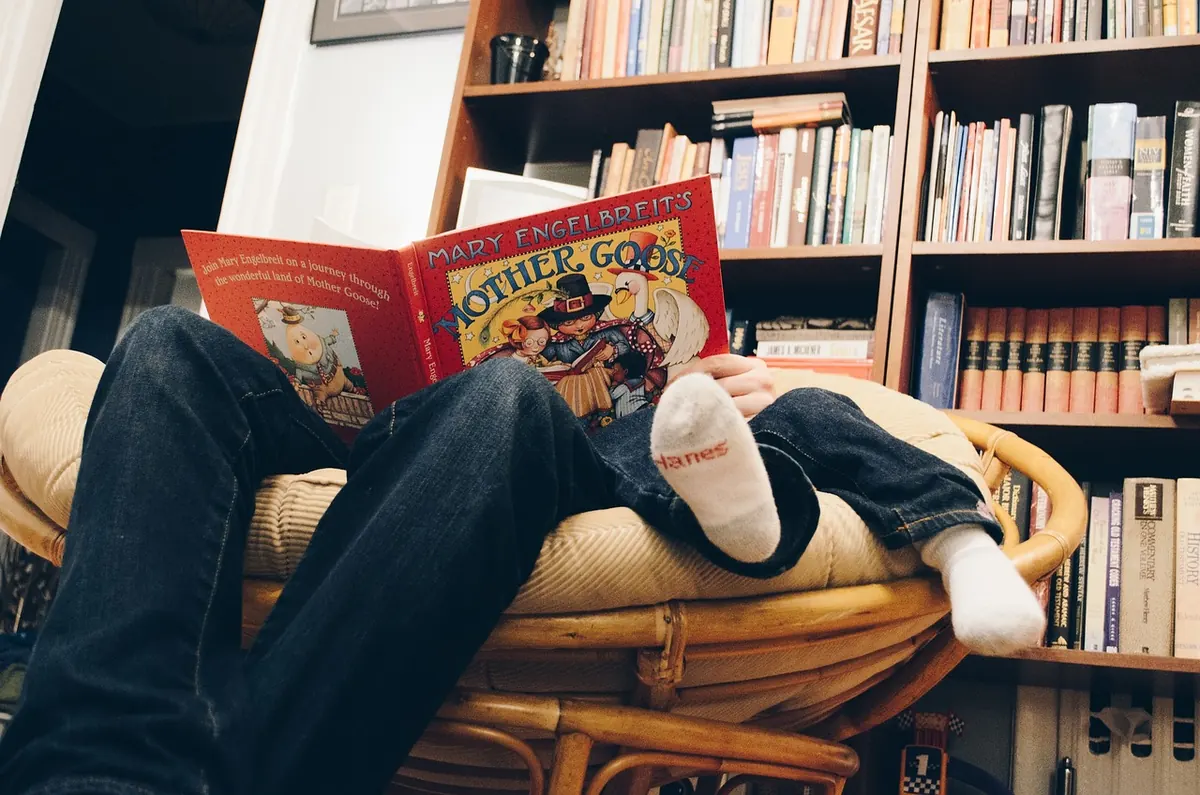
Bedtime has a way of collecting screens. A tablet propped against a pillow, a phone glowing on the nightstand, one last video that turns into three. The intention is often good: a few minutes of quiet. The result can be a child who is wired rather than settled, and a parent who is more tired than before. A short tale offers a different ending to the day. It is low-tech, low-stimulation, and short enough to fit even the most uneven evening.
You do not need to be a performer. You need a tale that lasts five to ten minutes, a place to sit, and a voice willing to slow down.
Why Short Tales Fit the End of the Day
A short tale asks less of everyone. It does not require a child to follow a complicated plot or beg for one more chapter. It ends before attention frays. That matters at bedtime, when children are tired and parents are running on the last of their energy.
Short tales also leave room for imagination. No bright images or sudden sounds compete for attention. A child can picture the lantern keeper or the bear who cannot find his blanket. The mind settles into the story instead of bracing for the next screen change.
Parents get something from this too. Reading aloud forces a slower breath and a narrower focus, even for a few minutes.
Choose Tales That Settle, Not Startle
Not every good story is a good bedtime story. The best choices have a small problem, a gentle resolution, and an ending that lands softly. A tale about a mouse looking for a quiet place to sleep works. A tale about a dragon battle does not, even if it is short.
The three-question test
Before you read a tale at bedtime, ask:
- Does it end in calm, rather than a cliffhanger or a chase?
- Is the conflict small enough to resolve without fear or high excitement?
- Can a child picture the setting without a picture book?
If the answer to all three is yes, you have a candidate. Familiar tales are fine. Repetition is useful. A child who knows how the story ends can relax into it instead of waiting for a surprise. Keep a short list of favorites and rotate them slowly.
Your delivery matters, too. A whispery voice and a slow pace make a mild story feel soothing; the same words read quickly can feel like a pep talk.
Build a Five-Step Wind-Down Ritual
The tale works best inside a routine, not when it is dropped into a chaotic evening. The routine needs to be predictable enough that everyone knows what comes next.
- Park the screens early. Choose a spot where devices spend the last part of the evening, ideally out of the bedroom. This includes parents. A phone face-down on the kitchen counter is a clearer signal than one glanced at from the bed.
- Dim the lights and tidy one small corner. A chair, a floor cushion, or the end of the bed is enough. Lower light helps the body shift toward rest.
- Pick the tale before you sit down. Two choices are plenty for a younger child. Too much negotiation wakes everyone up again.
- Read slowly, with pauses. Let the story breathe. If you stumble, keep going. The goal is a calm ending, not a flawless performance.
- Close with the same short phrase. “The tale is done, the day is done.” Or simply, “Goodnight, story.” A repeated line signals that the routine is complete.
The whole sequence can take fifteen to twenty minutes. On hard nights, it can be shorter. The order matters more than the length.
Read Aloud Without Feeling Silly
Many parents avoid reading aloud because they imagine they need to do voices. You do not. A steady, quiet voice soothes more than a theatrical one. Change your pace for characters if it feels natural, but do not force it. Children care about presence more than performance.
Hold a physical book or a printed page if you can. A screen can work in a pinch, but it brings the old temptation back. If you are telling a tale from memory, keep it simple: one character, one small problem, one gentle ending.
If you are the tired one
Use a tale you know well. Read the same one three nights in a row. Let a child choose between two stories instead of an open-ended “What do you want?” Sit down before you start. A tired parent standing in a doorway reads faster and sounds more impatient than one in a chair.
On low-energy nights, shorten the ritual: one short tale, one line of thanks, lights out. A small routine done consistently beats a perfect one abandoned after a week.
Let Kids Help Shape the Routine
Children are more likely to accept a routine they helped build. Give them a job: choosing the tale, turning down the light, or placing the screens in their parking spot. A younger child can pick a story card; an older child can retell a favorite tale in three sentences.
You can also make up a continuing tale. A family of hedgehogs who run a tiny café. A girl who keeps a moon in her pocket. Keep episodes short and calm. The point is a familiar place to return to, not a complex world.
If a child wants to add a detail, let them. “The bear had a blue blanket.” Fine. The story becomes theirs, and bedtime becomes a shared project rather than a rule imposed from above.
Handle the Predictable Bumps
Expect requests for one more tale, a claim that the story is boring, and your own missing of the screen. These are ordinary bumps, not signs that the routine has failed.
For “one more,” use a consistent answer: “One tale is tonight’s tale. Tomorrow’s tale is waiting.” If a child says the story is boring, ask what would make it better. Sometimes the fix is a different tale, a blanket, or a quieter voice. If you miss the phone, put it somewhere inconvenient. Proximity is the enemy of a screen-free wind-down.
If the routine slips, start again without a lecture. A short tale is easy to restart because it asks so little. If bedtime resistance or sleep troubles persist, talk with your child’s healthcare professional. A story routine can support rest, but it is not a treatment for sleep problems.
A Sample Twenty-Minute Evening
Here is one version of how the routine can look. Adjust the times to your family.
- 7:30 — Screens go to their parking spot. Pajamas and teeth.
- 7:40 — Lights dim. One small tidy-up: toys off the bed, curtains drawn.
- 7:45 — Story corner. Your child chooses between two short tales.
- 7:47 — You read slowly for five to eight minutes.
- 7:55 — A short quiet chat: one thing that went well, one thing for tomorrow.
- 8:00 — The closing phrase, a kiss, lights out.
Some families will want the chat before the tale; some will skip it. The pattern matters more than the order: screens away, lights low, a tale, a clear ending.
Start With One Short Tale Tonight
Pick one tale you know and one small corner to sit in. Put the screens away ten minutes earlier than usual. Read for five minutes, close the book, and say the same quiet line you will use tomorrow. That is enough for the first night.
Do it again the next night. Then again. The routine does not need to be perfect to be useful. It needs to be repeatable, short, and calm enough that both child and parent will return to it. A short tale will not solve every bedtime struggle, but it can give the day a softer ending.
Photo: StockSnap / Pixabay