



7 Common Mistakes That Make Bedtime Stories Too Stimulating
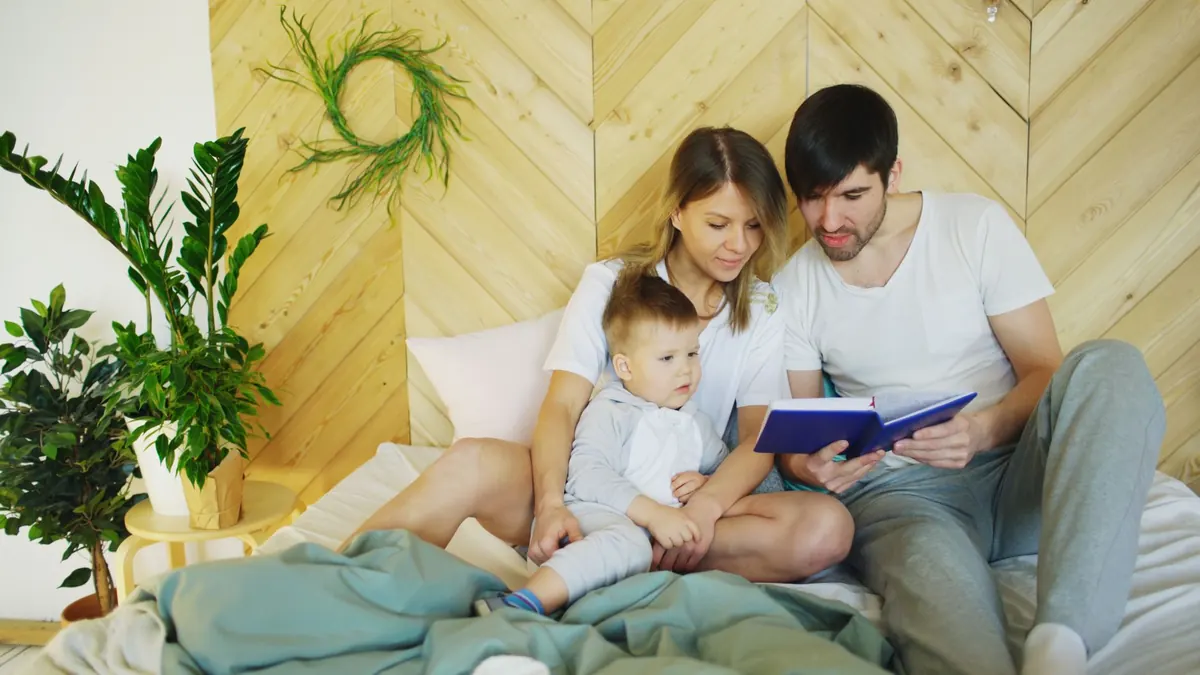
The lights are low, the teeth are brushed, the book is open. Twenty minutes later your child is sitting bolt upright asking what happens next, and you are quietly calculating how long it will take to get them back down again. The story did its job too well. It woke them up.
A bedtime story is meant to be the off-ramp from the day, not a second on-ramp. Most of the reasons it doesn't work come down to a handful of small choices: how fast you read, how much trouble the plot stirs up, how loud you get, how bright the room is. None of these are hard to change. Here are seven of the most common mistakes, and what to do instead.
1. Reading at Daytime Speed
Almost everyone reads aloud at conversation pace, which is faster than a tired child can comfortably follow. When the words come quickly, the listener has to work to keep up — and working is the opposite of drifting off. You can hear it happen: the child interrupts more, asks you to go back, or starts fidgeting with the blanket.
Try this: open the book at roughly your normal reading speed, then let each page take a beat longer than the one before. By the final pages you should be moving noticeably slower than when you started. Short sentences get a pause at the full stop. Long, rolling sentences can flow a little more.
A quick self-check
If you can't comfortably set the book down on your knee between two sentences, you're going too fast. The pause is part of the story, not a gap in it.
2. Choosing a Plot That Keeps Adding Trouble
Conflict is what makes a story worth listening to, so it's tempting to pick something with real momentum. But at bedtime, every new complication sends a small signal: stay alert, something is happening. A tale where the problem gets worse three times before it gets better is a campfire story, not a lullaby.
Look for a gentler slope. A lost mitten that turns up in a coat pocket. A cat looking for a warm place to settle. A night train crossing a quiet country, with nothing worse than a long tunnel. These stories still have shape — a small want, a small search, a settling — but they don't require the listener to track danger.
Skim ahead before you commit. If the middle of the book involves a chase, a separation, or a moment where the lights go out, save it for a rainy afternoon.
3. Ending on a Cliffhanger
"And that's where we'll stop — chapter two tomorrow!" is a lovely trick for a daytime read-aloud. At lights out, it leaves an open loop, and a brain that was just beginning to slow down now has something to rehearse. Some children will lie there finishing the story themselves. That's not sleep; that's homework.
End closed. The character is home, the problem is solved, the household is quiet. It sounds almost too simple, but a final line such as "and then she pulled up the blanket and closed her eyes" does real work. It hands the listener permission to stop.
Re-reading the same book for the fifth night in a row is not lazy parenting. Familiarity means less tracking, less guessing, less alertness.
4. Over-Performing
Voices are fun. They're also a stimulant. A growl, a squeaky mouse, a shouted line of dialogue — each one lifts the energy in the room just as you're trying to lower it. You don't have to read in a monotone, but the performance should taper, not build.
- Use a character voice for a sentence or two, then let it settle back into your own.
- Cut the sound effects that spike: door slams, thunder, sirens, animal noises at full volume.
- Lower your volume page by page rather than dropping to a whisper all at once at the end.
- Don't read over noise. If a fan or a washing machine is running, move closer instead of getting louder.
- Sit close enough that a quiet voice still reaches. Proximity does more for calm than volume ever will.
By the last page, your voice should be barely above a murmur. Many parents find the child is already breathing differently by then.
5. A Room That Still Says Daytime
The overhead light is the most common culprit. It's bright, it's cool-toned, and it comes from above — exactly the arrangement your body associates with being awake and doing things. Reading under it for fifteen minutes undoes a lot of good work.
Move to one small lamp, low and to the side, ideally warm rather than white. If you can, dim it as you read. If you're reading from a phone or tablet — common when travelling — turn the brightness right down, use the warmest setting available, and keep the screen still. Scrolling, notifications and a bright rectangle in a dark room all pull attention outward at exactly the wrong moment.
Also worth a glance: your own phone, face-up on the bed, buzzing. Put it on the floor, face-down, or leave it outside the room.
6. Turning the Story Into a Quiz
"What do you think happens next?" "Can you find the little duck?" "Why do you think he's sad?" These questions are a genuine pleasure in a daytime read, and they build language beautifully. At bedtime they invite answers, opinions and negotiations, and every one of them is a small jolt back into conversation.
Keep the interaction pointed inward instead. Narrate with a soft rhetorical turn — "and the little duck was sleepy, wasn't he?" — and let it hang without expecting a reply. If your child asks something, answer in a sentence or two and return to the page. You're not being cold; you're holding the shape of the evening.
7. Letting the Story Run Past Its Own Ending
The book is finished. Then comes "one more page," and you read another chapter, and then you're discussing tomorrow's swimming lesson, and now it's twenty past and everyone is awake again. The story had a natural end and you kept the engine running.
Give the whole ritual a firm shape instead: pajamas, teeth, a last drink, then the book as the final quiet act of the day. When you reach the last line, close the book, say the same short sentence you always say, and sit still for a few seconds before getting up. Children learn that closing sentence the way they learn a door closing.
A bedtime story isn't a performance. It's a hand on the shoulder, delivered in words.
A Calmer Storytime in Six Small Steps
- Dim the room before you open the book — one low lamp, no overhead light.
- Take one slow breath and start below your normal speaking volume.
- Read the first pages at an ordinary pace, then let each page slow slightly.
- When trouble appears in the plot, keep your voice level. Don't let it rise with the story.
- Land the ending, close the book, and use the same closing sentence every night.
- Sit in the quiet for a few seconds before you stand up.
None of this requires a new bookshelf or a different child. It's mostly a matter of pace, a lamp, and trusting that a story can be gentle and still be good.
If bedtime is a struggle most nights despite a calm routine, and your child seems genuinely unable to settle, it's worth mentioning to your pediatrician or family doctor rather than trying to solve it with better books alone.
Photo: Vitaly Gariev / Pexels